CAPILLARY CONTROL
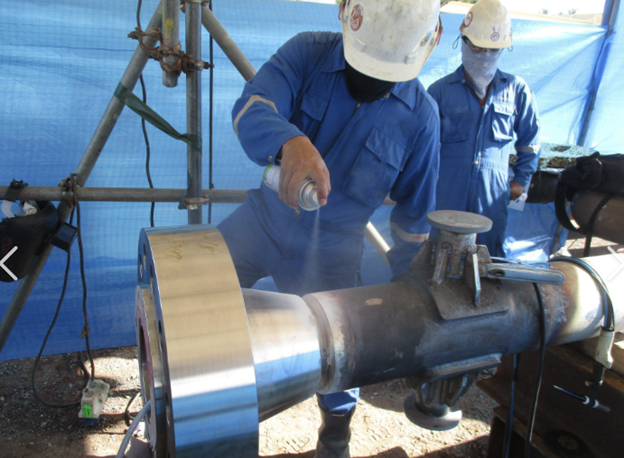
This method of non-destructive testing is used to detect defects and/or irregularities that destroy the surface. A low-viscosity liquid, known as a penetrant, is applied to the part and allowed to linger on the part for a certain amount of time. The excess penetrant is carefully removed and a developer is applied, which pulls the penetrant out of defects and/or irregularities due to capillary action and provides a contrasting background to improve the visibility of the readings.
The materials being tested include non-ferrous metals and ferrous metals, although ferrous metals are usually tested using a magnetic powder test to detect the subsurface layer. This method is used to detect surface defects in casting, forging, and welding and/or discontinuities such as cracks, surface porosity, leaks, fatigue cracks on operational components, and inherent manufacturing defects.
Surface preparation is crucial, so it is important to ensure that the surfaces are free of oil, grease, scale, paint, rust or other residues that may affect the quality of inspection.